

From Global to Local: Ellen Duerksen’s Giving Journey
“It’s time to think about ‘where do you invest?’”
Ellen Duerksen knows what she’s talking about. A Richmond resident, former business owner, world traveler, and dedicated philanthropist, Ellen has thought about that question a lot. It’s what initially led her to the Community Foundation in 2021.
But that wasn’t her first foray into the philanthropic world. Far from it. In fact, Ellen has been giving philanthropically for the last 40 years.
“From our first year of marriage,” Ellen says, “my husband and I had a separate giving account where we put 10% of our income.”
In the early days, their giving had more of a global focus because they moved around so often. But there was always a unifying factor: relationships. Whether they were giving to organizations in Ecuador, New Guinea, or Eastern Europe, they tried to support projects led by people they knew.
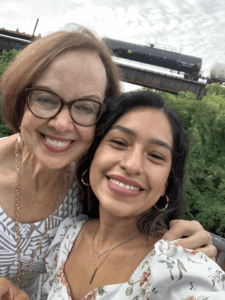
Ellen with one of her foster daughters
“We would much rather invest in the work of someone or the family of someone we knew,” Ellen told us. “We wanted our giving to be personal.”
A lot of that changed at the end of 2017, when the couple settled in Richmond. Just a year later, Ellen’s husband died unexpectedly. Amidst her grief, she was also confronted with a series of new responsibilities: handling the estate, financially planning for the years ahead, and the sale of the business they had built together. Soon after, like everyone, she was also homebound during the pandemic.
It was during all this that Ellen first heard about the Community Foundation from her financial planner. Soon after, her estate attorney also mentioned the Foundation as an option she should consider.
A Richmond resident without an established local network, Ellen considered this an opportunity to rethink how she gave back.
“I went immediately from a year of turmoil, into two years of COVID,” Ellen remembers. “So, part of the attraction was getting plugged into the community.”
Thinking Differently About Philanthropy
With her extensive history of giving back and money coming in following her husband’s death, it was never a question about whether Ellen would continue her philanthropy. Rather, Ellen wanted to reconsider how she gave after so much had changed in her life.
“The biggest change was adding local to global,” Ellen said. “I had to think about philanthropy more strategically and for a timeframe beyond my lifetime. I began thinking about the bigger picture. I was looking for a new purpose.”
Following a lunch hosted by her financial planner with other local women where she learned more about the Community Foundation, Ellen began looking for opportunities to get involved. But where to begin?
Ellen opened her fund at the Community Foundation as a starting point. Afterward, she learned that the Foundation also provided volunteer opportunities with local nonprofits.
Ellen began thinking about the seven years she lived in Mexico City with her husband, and how she learned more about the challenges facing displaced people as a result. Over the years, they hosted 24 different unhoused individuals in their home, all experiencing different levels of displacement or housing insecurity. Her new focus area became abundantly clear.
“Suddenly I wasn’t married; suddenly I wasn’t working,” Ellen recalls. “I had a lot of time to think about the rest of my life and how I could be of service. Soon, my personal mission statement became: ‘Invest in the well-being of the displaced.’”
With the Community Foundation's guidance, Ellen began volunteering with the Sacred Heart Center, a nonprofit that offers programs, resources, and support to Richmond’s Latino community.
A Growing Passion
That was just the beginning of Ellen’s involvement.
After completing her volunteer work with Sacred Heart, she met with Community Foundation staff, who quickly identified Ellen’s passion for shelter and stable housing and invited her to take part in Giving Together Insights, an annual cohort for donors that deeply examines root causes and local solutions for a specific issue impacting quality of life in the Richmond region. In 2022, the cohort explored local Affordable Housing. With her usual vigor, Ellen jumped at the opportunity.
As a part of the cohort, attendees visited a different housing-related organization over six weeks to learn about their approach to improving the regional housing crisis. Since then, Ellen has continued taking part in learning opportunities provided by the Foundation and her philanthropic interests have expanded as a result.
“Housing is still close to my heart, because the way out of poverty is stable housing and a living-wage job, so learning about and giving to economic prosperity initiatives makes sense,” Ellen shared, then added: “What is evolving for me is a greater focus on refugees and immigration.”
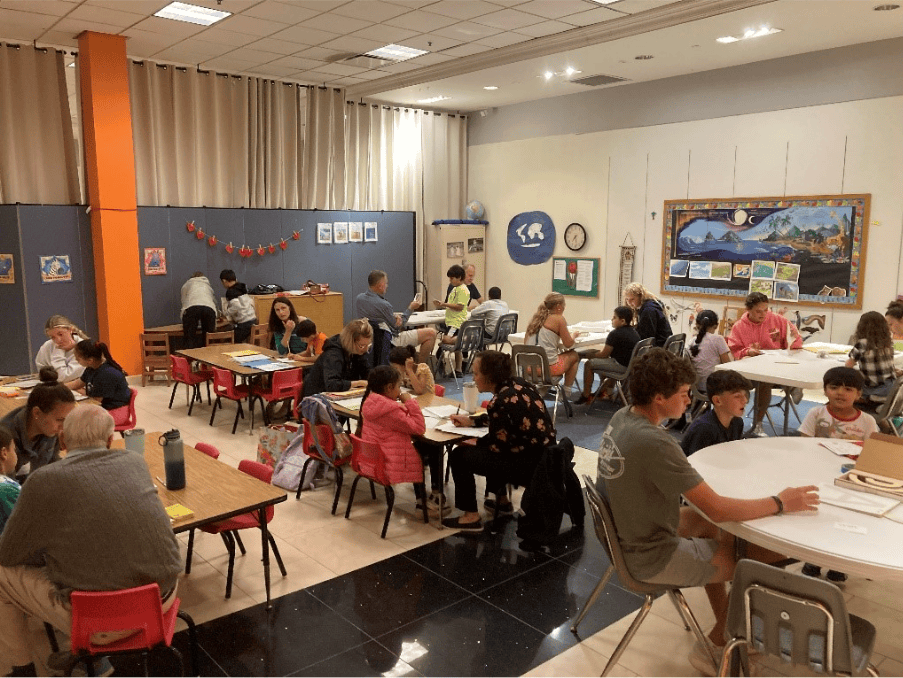
Ellen now leads a tutoring program at Third Church for the children of immigrants and refugees. She also serves on the Board of ReEstablish Richmond, a local nonprofit supported by the Community Foundation that connects recent immigrants and refugees to essential services.
Continuing in the tradition established with her late husband, Ellen also remains busy ensuring that her home is the refuge she knows so many need.
Currently, Ellen cares for two foster daughters who arrived in the U.S. as unaccompanied minors. She has also been working with a team of people from her church to help a displaced Ukrainian family integrate into the Richmond community.
A Personal Philosophy
Today, Ellen continues to work through the Community Foundation, taking advantage of staff expertise, guidance, and partnerships across Richmond’s nonprofit network to meet the different needs she is so passionate about addressing.
A passion she is confident the Community Foundation will make sure continues long after she is gone. But perhaps the most important takeaway is what Ellen shared with us as we finished our conversation.
My personal philosophy,” she said, “is that I want to leave behind a lasting legacy by serving those in need. As others are planning, I hope they consider that the biggest impact they can have isn’t necessarily giving everything to your kids, but instead giving it to your community; to the world. To make it a better place.”